

Creating Home on Campus: The Cultural Inclusion Centre with Cory Cardinal
While National Indigenous History Month and National Indigenous People’s Day in June provided important opportunities for recognition, their significance extends throughout the year. To honor these observances, we sat down with SAMRU’s Cultural and Indigenous Inclusion Programmer, Cory Cardinal, to delve into the Cultural Inclusion Centre (CIC) and explore the importance of having cultural and Indigenized spaces on campus.
Keep reading to learn about Cory’s history with your Students’ Association and how the CIC has worked to Indigenize and collaborate with all cultures on campus.
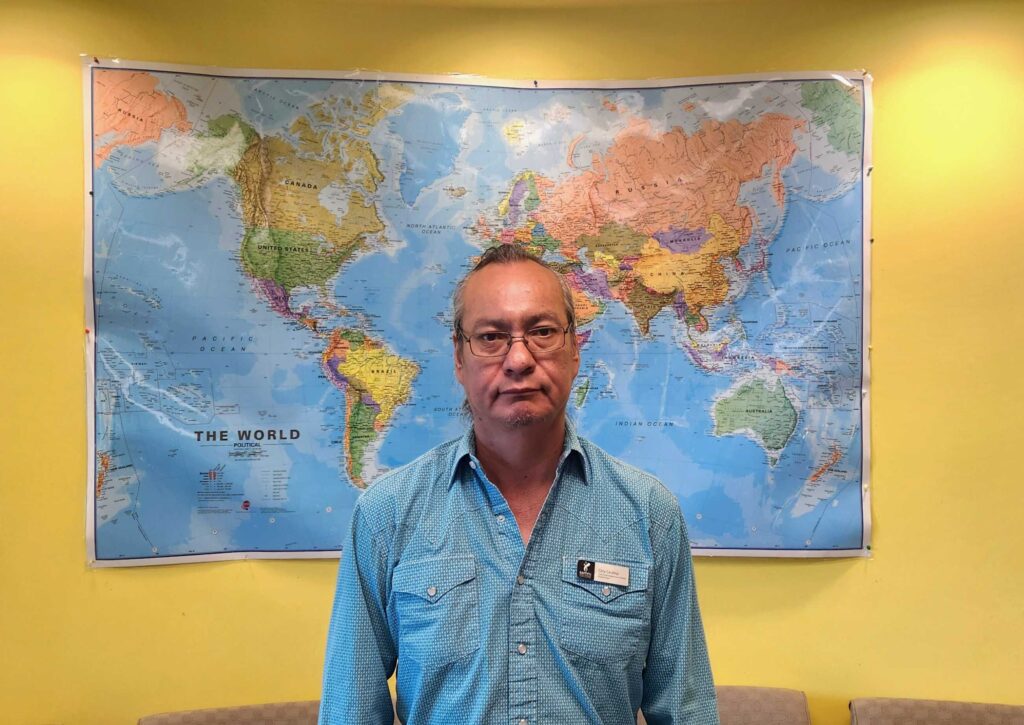
Can you tell us a little bit about yourself?
My name is Cory Cardinal, and I’m the Cultural and Indigenous programmer with the Students’ Association, and I’ve been here for 22 years. I’m Plains Cree and Tsuut’ina, and I grew up on Tsuut’ina on a little ranch— now it’s a freeway. I was a student here at Mount Royal in the 90s, and I got involved with the Indigenous Student Club. When the club was formed, we asked the students to write on Post-It notes the top three things they wanted to accomplish as a club. The main thing they wanted was to develop an Indigenous student centre, so as a club, we worked on things like developing the Powwow and the Native Centre.
What is the importance of having cultural and Indigenous spaces on campus?
It all goes back to history and things like residential schools, where western institutions weren’t so welcoming. So developing these cultural and Indigenized spaces just gives students opportunities to connect with the community, create a sense of home, and have a place to build and create awareness and share culture. Indigenous [peoples] have been displaced, unheard, and devalued for so long that having these spaces creates a welcoming environment.
What does Indigenization mean to you?
In my personal way of looking at it, it’s creating an educational system that helps both Indigenous and non-Indigenous rebuild a relationship where there’s less bias.
We have students who will go on to become lawyers, police officers, nurses, social workers, and other professionals in prominent positions. These are future leaders will help create a better environment for the Indigenous community. Issues such as the number of children in care and the high incarceration rates must change – and we can start making those changes at the post-secondary level.
What can non-Indigenous students do to work towards reconciliation?
It’s totally up to them on what level they want to Indigenize. There’s tons of history to read, and there’s the Truth and Reconciliation Commission. That’s when Canada decided they were going to build reconciliation. Students can look at that and try to understand the underlying issues [that led to] the Truth and Reconciliation Commission.
There is a system that does not work in Indigenous favour. Students should look at what could be changed and what doesn’t seem to be right and look into making those changes.
Do you have any recommendations for resources or readings for students to research?
There’s the Truth and Reconciliation Commission. You can easily search for and obtain a copy on the Internet.
Mount Royal signed Universities Canada’s commitments to truth and reconciliation.
Once the Office of Academic Indigenization here on campus gets rolling, that will have a great positive effect for everybody.
How can students get to know you and the Cultural Inclusion Centre (CIC)
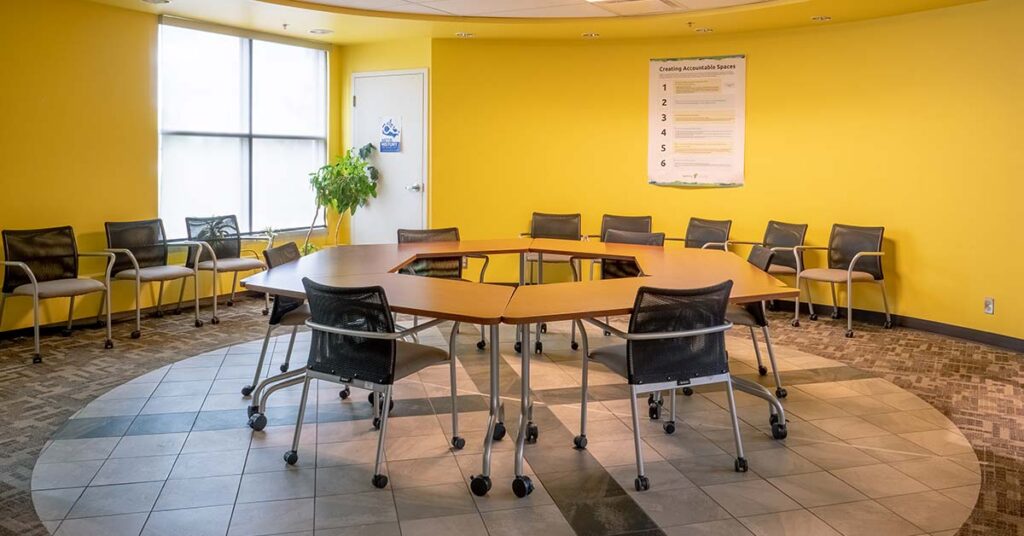
The Cultural Inclusion Centre is located in Z203 in Wyckham House, and what we do has a lot to do with what the students want to do. We encourage students to come talk to us and see if there’s anything they’d like to get involved in. If there’s a new idea and we have the capacity to help them we’ll develop that idea or help support in other ways.
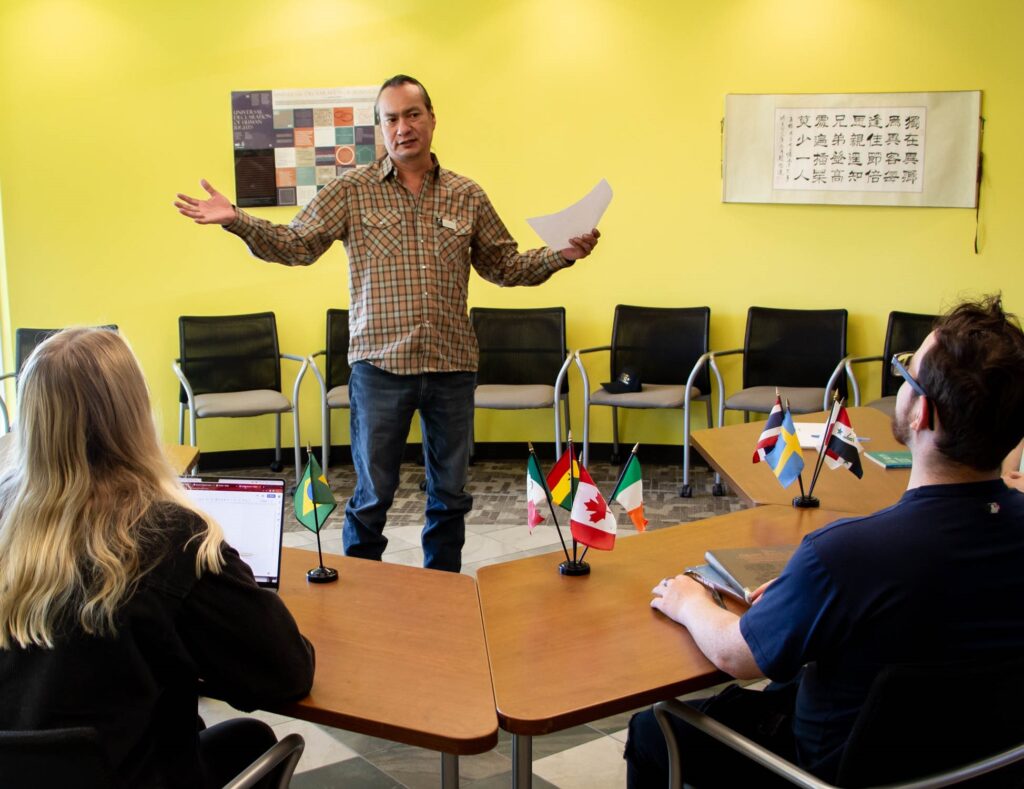
The one thing I like about my job is that everything is open and available to try. We’re not just focusing on Indigenous culture — we’ve got the whole world to play with!
What are the events you look forward to every year?
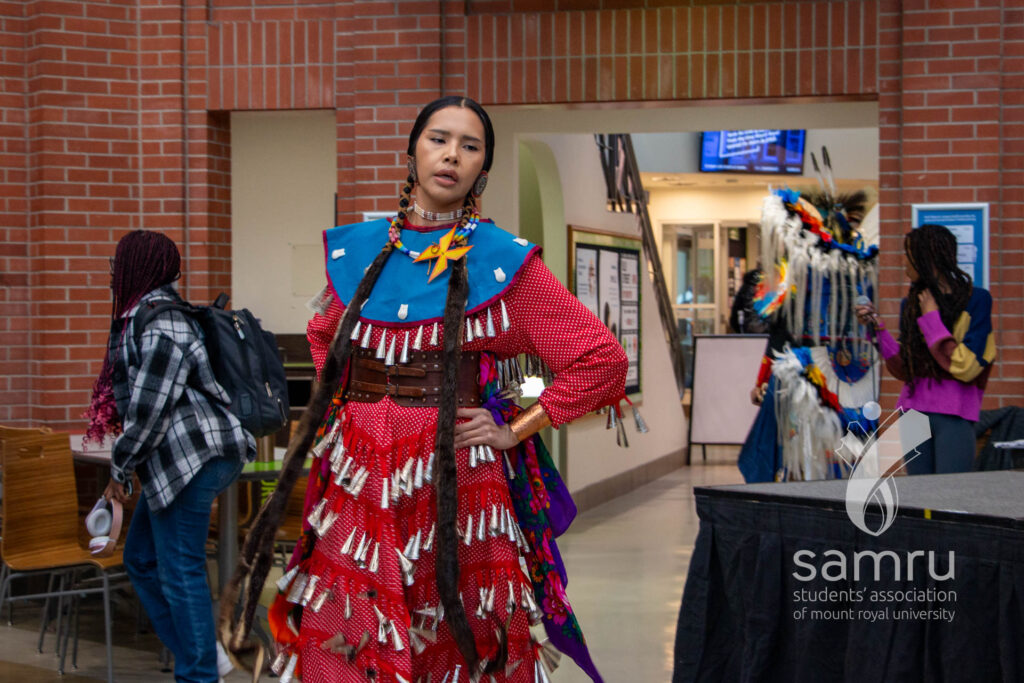
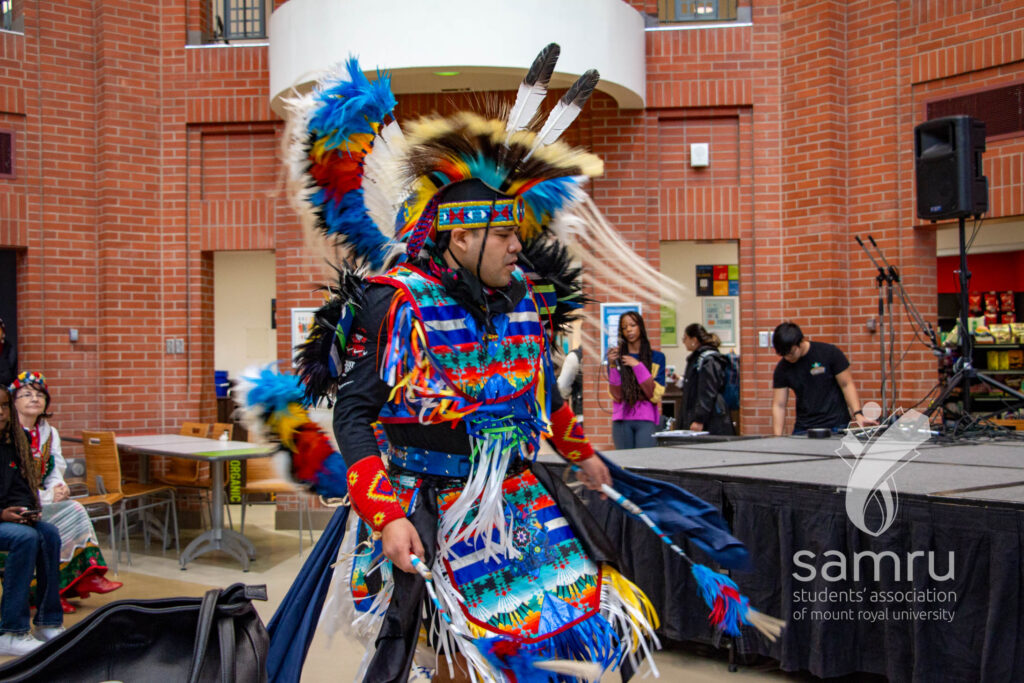
We have an annual Powwow we do in partnership with the university. It’s always fun to have the local Indigenous community come visit and be a part of the celebrations. In the past, a lot of our students have come to MRU because, as children, they came to the Powwow, and they felt like it was home.
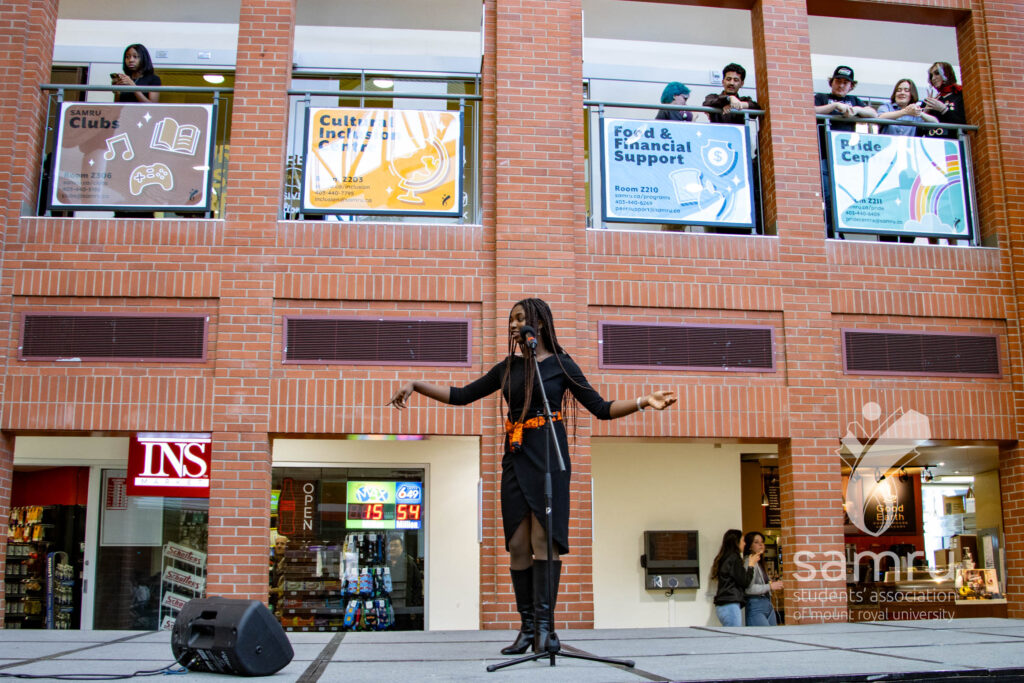
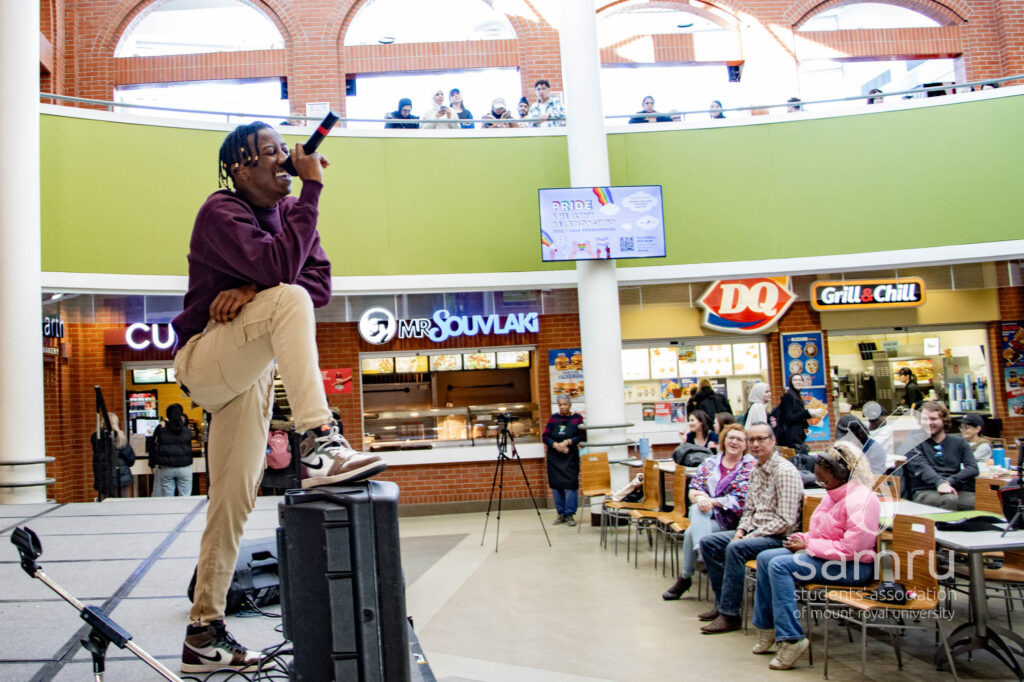
I really enjoyed Black History Month, working with the students on that and some of the awesome entertainment we have here on campus. The cultural performers are amazing.
I also like working with Mount Royal on the Cultures of MRU and creating new programming with the university.
To get in touch with Cory, you can email him at inclusion@samru.ca or come to the Cultural Inclusion Centre (CIC) in room Z203 in Wyckham House from 9:00 am – 4:00 pm on weekdays (excluding holidays).
For general inquiries, you can reach us at info@samru.ca.
